Understanding the domain structure in Active Directory (AD) is crucial for effectively managing and organizing resources within a network. Here’s a breakdown of the key components and concepts of AD domain structure:
Key Components of Active Directory Domain Structure
- Domain:
- Definition: A domain is a logical group of network objects (such as users, computers, and devices) that share the same Active Directory database.
- Purpose: It serves as a security boundary for managing access to resources and implementing security policies.
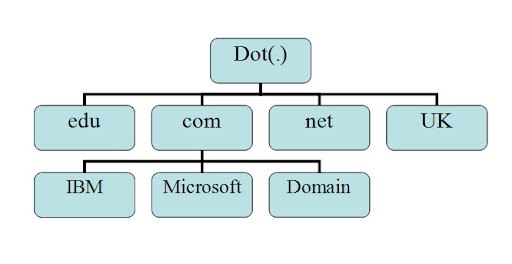
- Naming: Each domain has a unique DNS name (e.g.,
example.com).
- Organizational Units (OUs):
- Definition: OUs are containers within a domain that can hold users, groups, computers, and other OUs.
- Purpose: They help organize and manage objects within a domain. OUs can be used to delegate administrative control and apply Group Policies.
- Hierarchy: OUs can be nested to create a hierarchical structure that reflects the organizational structure.
- Domain Trees:
- Definition: A domain tree is a collection of domains that share a common root domain and form a contiguous namespace.
- Purpose: It allows for the creation of multiple domains under a single root domain, facilitating organizational structuring.
- Trust Relationships: Domains within a tree have transitive, bidirectional trust relationships, allowing seamless resource access.
- Domain Forests:
- Definition: A forest is a collection of one or more domain trees that share a common schema and global catalog.
- Purpose: Forests are the top-level container in an AD structure. They enable the organization to manage multiple domain trees with different namespaces.
- Trust Relationships: Forests can establish trust relationships with other forests, allowing cross-forest resource access.
- Global Catalog:
- Definition: A global catalog is a distributed data repository that contains a searchable, partial representation of every object in every domain within a forest.
- Purpose: It enables users and applications to find directory information regardless of which domain in the forest actually contains the data.
- Role: The first domain controller in a forest automatically becomes a global catalog server.
- Trust Relationships:
- Definition: Trust relationships are links established between domains to allow users in one domain to access resources in another domain.
- Types of Trusts:
- Parent-Child Trust: Automatically created between parent and child domains in a tree.
- Tree-Root Trust: Automatically created between the roots of trees in a forest.
- External Trust: Manually created between domains in different forests or between an AD domain and a non-AD domain.
- Forest Trust: Manually created between two AD forests.
- Shortcut Trust: Manually created to improve performance in large forests.
- Realm Trust: Created between an AD domain and a Kerberos V5 realm.
Logical and Physical Structure
- Logical Structure:
- Domains: The core unit of the logical structure.
- OUs: Used to organize objects within a domain.
- Trees and Forests: Provide a hierarchical and scalable structure for organizing domains.
- Physical Structure:
- Domain Controllers: Servers that store the AD database and handle authentication requests.
- Sites: Represent physical locations in a network. Sites are used to manage replication traffic and authenticate users.
- Replication: The process of synchronizing data across domain controllers within a site (intrasite replication) and between sites (intersite replication).
Group Policies
- Definition: Group Policies are settings that control the working environment of user accounts and computer accounts.
- Application: Group Policies can be applied to domains, OUs, and sites to manage security settings, software installations, script execution, and more.
- Group Policy Objects (GPOs): These are collections of policy settings that can be linked to domains, OUs, or sites.
Example of a Domain Structure
Imagine a company, “ExampleCorp,” with the following structure:
- Forest: examplecorp.com
- Domain Tree:
- Root Domain: examplecorp.com
- Child Domains:
- us.examplecorp.com
- eu.examplecorp.com
- Organizational Units:
- Within us.examplecorp.com:
- Users
- Computers
- Departments:
- IT
- HR
- Finance
- Within us.examplecorp.com:
In this structure, ExampleCorp has a single forest with a root domain and two child domains. Each child domain has its own set of OUs to organize users, computers, and departments. Group Policies can be applied at different levels to manage the environment.
By understanding these components and their relationships, you can effectively design, implement, and manage an Active Directory domain structure that meets the needs of your organization.


